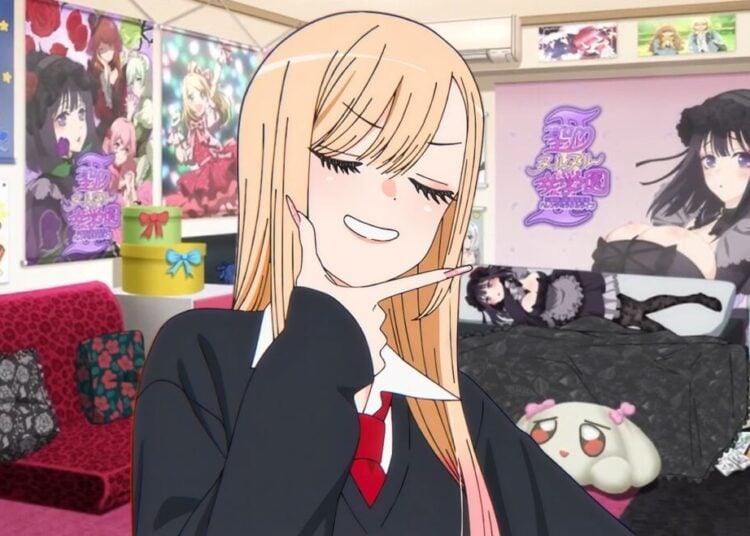
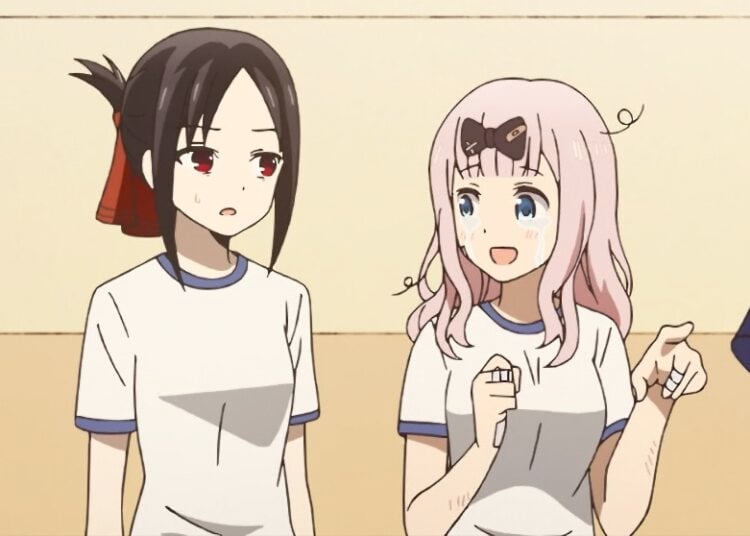
Pets are a part of our household in Japan, and currently we’ve got a dog (faithful old Sakura) and two cats (black-and-white Mix-chan and all-black Kuro). My wife once remarked to me, “It’s important to keep pets in the home. They die in place of family members when the family runs into bad luck.” My eyes become little black points like an anime character’s at this, as I struggled to understand her statement. She was talking about the concept of migawari (me-gah-wah-ree), literally meaning “substitute for” or “sacrifice for.” When our dog Chibi passed away earlier this year, the general consensus among my Japanese family was that he had died in order to protect someone in the family from injury or worse, and everyone loved him a little more for that. Originally a ninja term meaning to dress up a tree to look like a person so an enemy would think it was you and attack it mistakenly, the word refers to anything that takes bad luck in your place, protecting you as it does so. There are many kinds of objects believed to serve as “lightning rods” for bad fortune, including various types of omamori good luck charms or Buddhist statues — we’ve even got a cool migawari charm up on the site today.
According to SF writer Isaac Asimov, the only constant is change, continuing change, inevitable change. Sometimes this change can take decades to become visible, and other times you can see trends happen right outside your window. The long-standing tradition of Japan trailing U.S. society by 10-20 years is continuing as the country faces the same kind of pressures on its manufacturing economy that the U.S. started experiencing in the early 1990s. The reasons are similar — the high cost of building something in Japan leads to more companies outsourcing products to China as industries shift and change. One of the landmarks of the nearby city of Maebashi was a giant Daihatsu factory in the center of town — they manufactured those cute midget-sized vehicles I used to see driving around on the SDSU college campus. The factory was closed last year, though, and in its place sprang up a new shopping district with supermarkets, clothing stores and restaurants, all of which seemed to mirror some of the changes that the U.S. has gone through over the last decade or two, moving from manufacturing to a service-based economy, and not always smoothly, either. Happily, although there is a trend towards larger, more convenient stores in Japan today, consumers are more concerned with overall quality of service rather than just price, and there are as yet no giant national retail chains that wield an unfair amount of influence over the economy, hopefully staving off “Wal-martification.”
Establishing a rival relationship with someone is a smart way to motivate yourself, and I put this tactic to good use while studying Japanese. I had a Chinese friend who was taking level 1 of the Japanese Language Ability Test (JLPT) at the same time as me, and I made up my mind that I was going to beat her score. This was quite a task, since Chinese people have a natural affinity for kanji, the Chinese having invented them and all. But although my friend could read any Japanese sentence and get most of the meaning out of it, she was thrown off by the fact that there are two readings for most Japanese kanji, the Chinese one (based on how the character was pronounced in the 6th century when kanji came to the country), and the local Japanese one. The interplay between these two ways to read a character is subtle, like the Japanese people themselves, and it can be quite difficult to know how to pronounce a character in a given situation. In the end, I beat my friend by ten points, quite an accomplishment for a “white boy” foreigner.
We’re having fun around here at J-List, playing with the new item we’ve posted to the site today: Moe (mo-EH) Soundrop, keychains that play super-cute anime voices when you press them. The latest step in the evolution of Japan’s culture of “moe,” roughly translatable as the burning, happy feeling you get when you see your favorite anime character, there are eight archetypal cute girls represented in the series, from cat girl to maid to younger sister who calls you “Oniichan!” and more. The recorded voices in the capsule toy keychains sound great, the batteries are replaceable, and best of all, they’re very affordable, so you can get the girls you’d like to hear or pick up the whole set.