We all know that anime is a wonderful medium in which anything that can be imagined can be animated, without being limited by silly things like real-world logic. But every so often, a casual fan will point out that what we’re seeing on screen isn’t actually possible under the laws of physics. Let’s explore why anime logic is fine the way it is, and why these “fans” need to STFU!
Great news: J-List has started a new sale, giving you 18% off all DVDs, Blu-rays, and Nintendo Switch games. That means an instant 18% off all imported anime Blu-rays, sexy live-action JAV titles, hentai anime, and region-free anime games for your Nintendo Switch! Browse all sale products now!
The Joy of Anime Logic
We all love anime because it lets us escape into a world where anything is possible. A 15-year-old boy can climb into the cockpit of a giant robot — which doesn’t require a key or a password to use — and easily win his first mecha battle. A character can die and be reincarnated as a slime, a spider, a magic sword, or even a vending machine, and so on. Each anime creates its own world, with a unique set of logical rules, which are all different from the real world we live in.
Some examples of “anime logic” that might seem odd to outsiders include:
- Children who spend 30 years pursuing a career as a Pokémon Master yet don’t age a day. How do I get in on that kind of eternal youth? [Pokémon]
- Characters who wear the same clothes every day, like Cowboy Bebop, Gintama, or Steins;Gate. Don’t the characters notice that their clothes are always the same, day in and day out?
- Where are the parents? They usually live abroad, allowing their kids to fend for themselves.
- It would be physically impossible for a healthy male living with two horny not-related-by-blood stepsisters to not cross the line with them sexually, but somehow the main character manages it in every episode. [KissXSis]
- “Bikini armor” that provides protection for the wearer without covering most of her body. [Bikini Warriors]
- Why do the pupils in a girl’s eyes disappear the moment she’s about to go into “yandere mode”? [School Days]
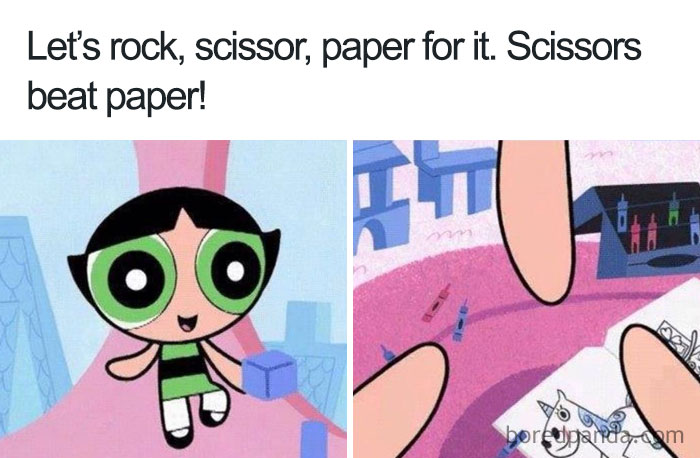
Anime Follows Its Own Rules
The reality is that anime logic makes perfect sense if you understand that each series creates its own world that the characters inhabit, with its own unique rules laid down by its creator. The whole point of anime is escapism, letting us visit fantastic places and access emotions we can’t experience in our daily lives. As long as the characters stick to the logical rules set up in that world, everything works fine.
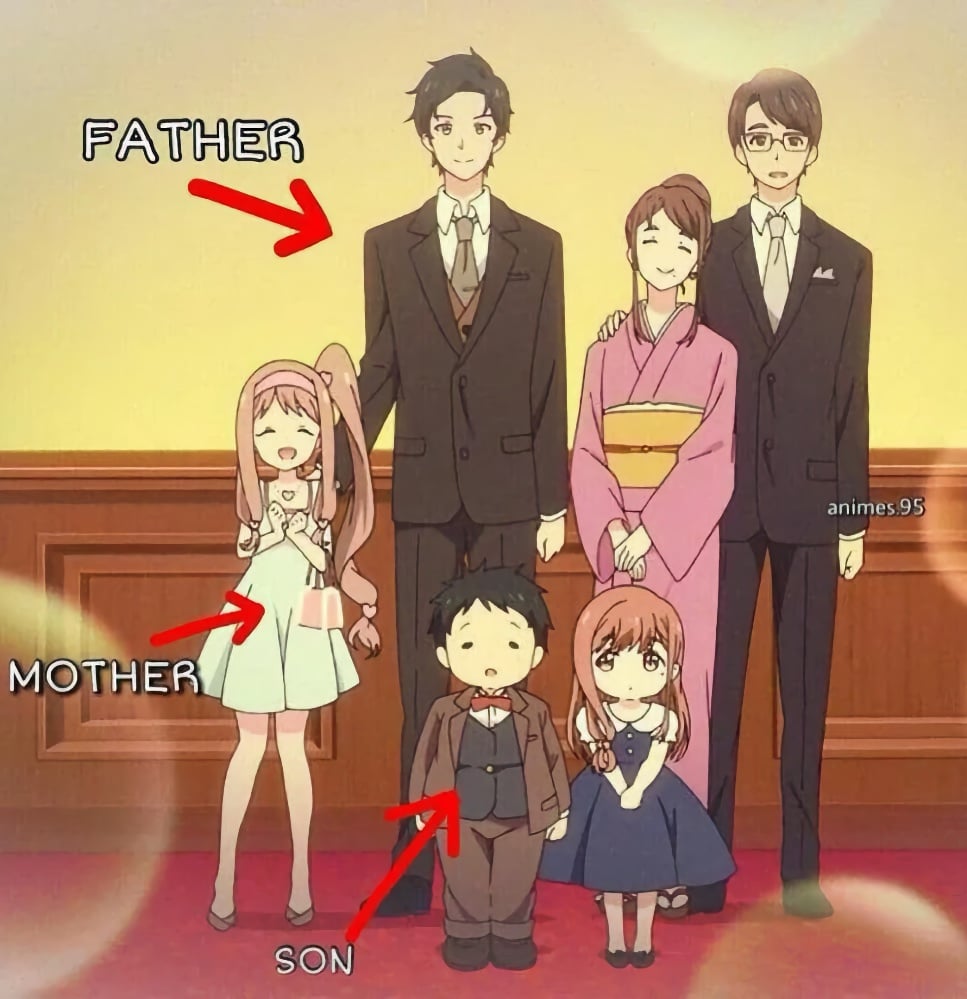
They’re How Old?! Why Ages Don’t Matter in Anime Logic
The biggest frustration of applying real-world rules to anime is when casual “fans” bring up the fact that some characters are under 18. They tut-tut serious otakus for not editing our watch lists to match their view of what anime should be allowed to exist.
What happens when famous Japanese artists are found out to have drawn hentai in the past? Nothing! Read this blog post next!
I recently posted an Onegai Teacher meme to social media, and one of my followers commented that it was a good show, but “problematic” because of the ages of the characters. This anime actually bends over backwards, inventing a plot point (the “standstills”) to make Kei and Ichigo over the age of 18 despite being in their second year of high school. Perhaps my follower was referring to Hyosuke, who starts dating Kaede despite being only 15, and has implied sex with her off-camera. But… isn’t this what most real 15-year-olds would likely do? I wonder if my follower would feel the same way about Fast Times At Ridgemont High, which overtly showed us the action on-camera.
Let’s look at some reasons why character ages are next to meaningless thanks to anime logic!
Character Ages Rarely Match Their Visual Design
Anime is a stylized medium, with characters that possess exaggerated features to make them more visually appealing. Does Gohan really look like he’s eleven at the end of the Room of Spirit and Time arc? Does Jotaro Kujo look like a 17-year-old high schooler? A character’s stated age says more about who the target audience for that anime is than about the character themselves.
Legal Age Doesn’t Matter When Time Itself Is Broken
Many anime series are set in extreme worlds where time has no meaning, thanks to the rules of that particular world.
- Most of the cast is 14 years old in Neon Genesis Evangelion, despite all the trauma and death the characters face every episode. When the story jumps forward after the Third Impact, everyone is still the same age, thanks to the LCL fluid, which keeps them from aging.
- Fantasy anime can operate without restriction. The half-elf Emilia is over 100 years old, because of course she is. Azusa Aizawa has been killing slimes for 300 years, but since she’s immortal, it’s all good.
- Many anime like Higurashi When They Cry involve time loops spanning hundreds of years. How can you make a judgment about how old Rika Furude appears to be when she’s lived through centuries of horror?

Ages Are Set to Fit a Genre, Not a Biology Chart
The main characters in anime series are nearly always the age of the audience most likely to be watching the show, or perhaps the age viewers would consider the “ideal age” to experience life. For example:
- Kirito is a 14-year-old boy who’s a badass at video games, because Sword Art Online is aimed at 14-year-old boys who want to self-insert themselves into his character.
- Yuuki Rito from To Love-ru is a 15-year-old who gets a harem of sexy girls, because that’s the age at which boys’ hormones really kick into high gear.
- Gojo is a quiet boy with an odd hobby who ends up with the cutest girl in school in love with him, because that’s a setup that appeals to the fanbase of My Dress Up Darling.
- “Workplace romance” shows like My Tiny Senpai and Wotakoi: Love Is Hard for Otaku are aimed at working-age Japanese who want to watch relatable characters finding love.

Related post: Do you think anime needs to “change” to fit Western expectations? Read J-List customers’ replies in this blog post!
Body Types Are Unrelated to Character Age
Sure, you might think of “loli” characters as being young, but it’s really about height and personality. Many popular loli characters in anime, like Taiga Aisaka from Toradora, Shiori Katase from My Tiny Senpai, or Komoe-sensei from A Certain Magical Index, appear young, yet are over the age of 18. (Komoe-sensei is in her 30s.)
To be a “loli” is to be diminutive, with a short height (and a matching flat chest) that will drive the story, usually because of the gap between the character’s appearance and her pride, strength, and mature personality. The character might be a child, or she might be a 500-year-old vampire. Who cares?

Real-World Moral Frameworks Don’t Map Neatly to Anime Logic
It’s common for anime to directly challenge the discomfort Westerners feel when contemplating young characters. Monogatari Series did this a lot, going out of its way to show pantyshots and sexy camera angles with Mayoi Hachikuji and Nadeko Sengoku. The loli teacher Komoe-sensei feels handcrafted to make casual anime fans squirm as they face the cognitive dissonance that comes from seeing a young-looking character in the role of a teacher… and hopefully realize that 2D characters have no actual age.
I’ve often compared the problem of anime character ages to Mickey and Minnie Mouse. They’re a happy mouse married couple. But there’s just one problem: mouse marriage isn’t recognized by any of the 193 United Nations member countries. Does anyone care about this? No, because Mickey and Minnie are fictional characters. Inside the framework of Disney animation, everyone is immortal, mice and ducks can marry, and dogs (Goofy) can own other dogs (Pluto) without raising any moral questions.
Of Course, Fans Should Stay in Their Comfort Zone
That’s not to say every fan should watch every anime. There are plenty of series that might turn off some fans for one reason or another.
Mushoku Tensei is about a NEET who gets reincarnated into a fantasy world. Some of the things he does in his new child body are less than savory. But it’s a fun show. Uzamaid and Wataten: An Angel Flew Down to Me both explore themes of women who develop unhealthy obsessions towards young girls for the sake of comedy. If you can’t separate fantasy from reality, you should probably avoid Eromanga Sensei and Kodomo no Jikan.
Thanks for reading this post about anime logic and the frustration some of us feel when casual fans try to apply real-world values to a highly stylized and fictional world. Do you know anyone who does this? Tell us in the comments below!
Let’s Chat
You made it to the end of this post! Thank you! As a token of our appreciation, enjoy an extra 5% off your next order with code BLOG at checkout. Also, don’t forget to follow J-List on all our platforms!
- Twitter/X, where Peter posts anime booba for you.
- Megumi Channel is our new YouTube channel, where Megumi-chan discusses all things anime. Please give us a follow!
- Bluesky, where we post several times a day.
- Facebook, where you can find our blog posts… though the site has become hostile to anime memes and other fun content.
- Discord, if you want to chat with other J-List customers of culture.

Great news: J-List has started a new sale giving you 18% off all DVDs, Blu-rays, and Nintendo Switch games. That means an instant 18% off all imported anime Blu-rays, sexy live-action JAV titles, hentai anime, and region-free anime games for your Nintendo Switch! Browse all sale products now!